Nature Study Through the Charlotte Mason Method
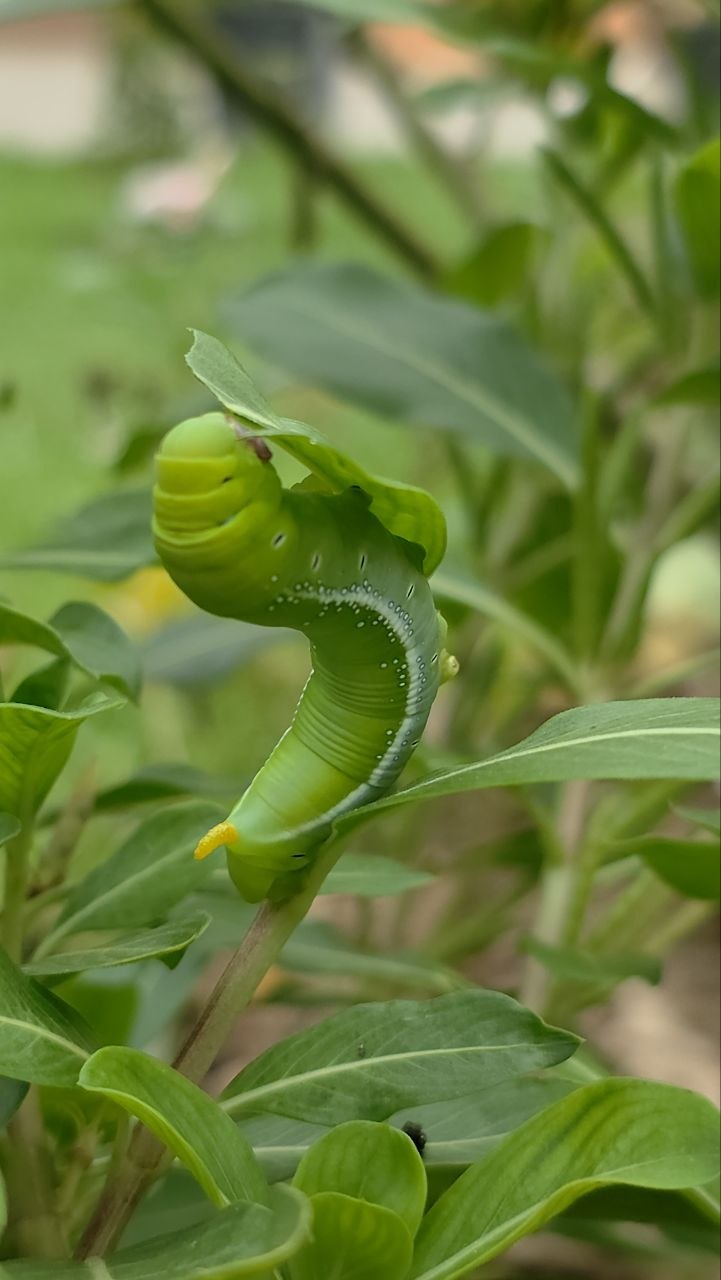
Before I explain what the Charlotte Mason method looks like in practice, here is the short answer: nature study in the CM method means taking children outside regularly, teaching them to observe the natural world with care and curiosity, and recording what they find in a nature notebook. It is not a formal science curriculum. It is a relationship with the living world built slowly over time, one creature at a time.
We Planted a Garden for Homeschooling… and It Taught Us How to See
A few months before we officially began homeschooling, we planted a garden.
I was not an experienced gardener. I could not name most of the insects that appeared on our plants, and I knew very little about host plants, pollinators, or the small relationships unfolding between the creatures outside our home.
I was certainly not an expert in Charlotte Mason nature study.
I was simply a mother who had spent the past few months reading and researching the Charlotte Mason philosophy, trying to prepare for our first year of homeschooling. Again and again, I encountered her emphasis on children spending time outdoors and forming a relationship with the natural world.
I understood the basic idea.
Children should go outside.
They should observe plants and animals.
They should keep a nature notebook.
It sounded beautiful, so I thought, We should prepare a garden for this.
We planted flowers, herbs, and other plants that might attract butterflies, birds, and insects. At the time, I thought we were creating an outdoor classroom where the children could have their science lessons.
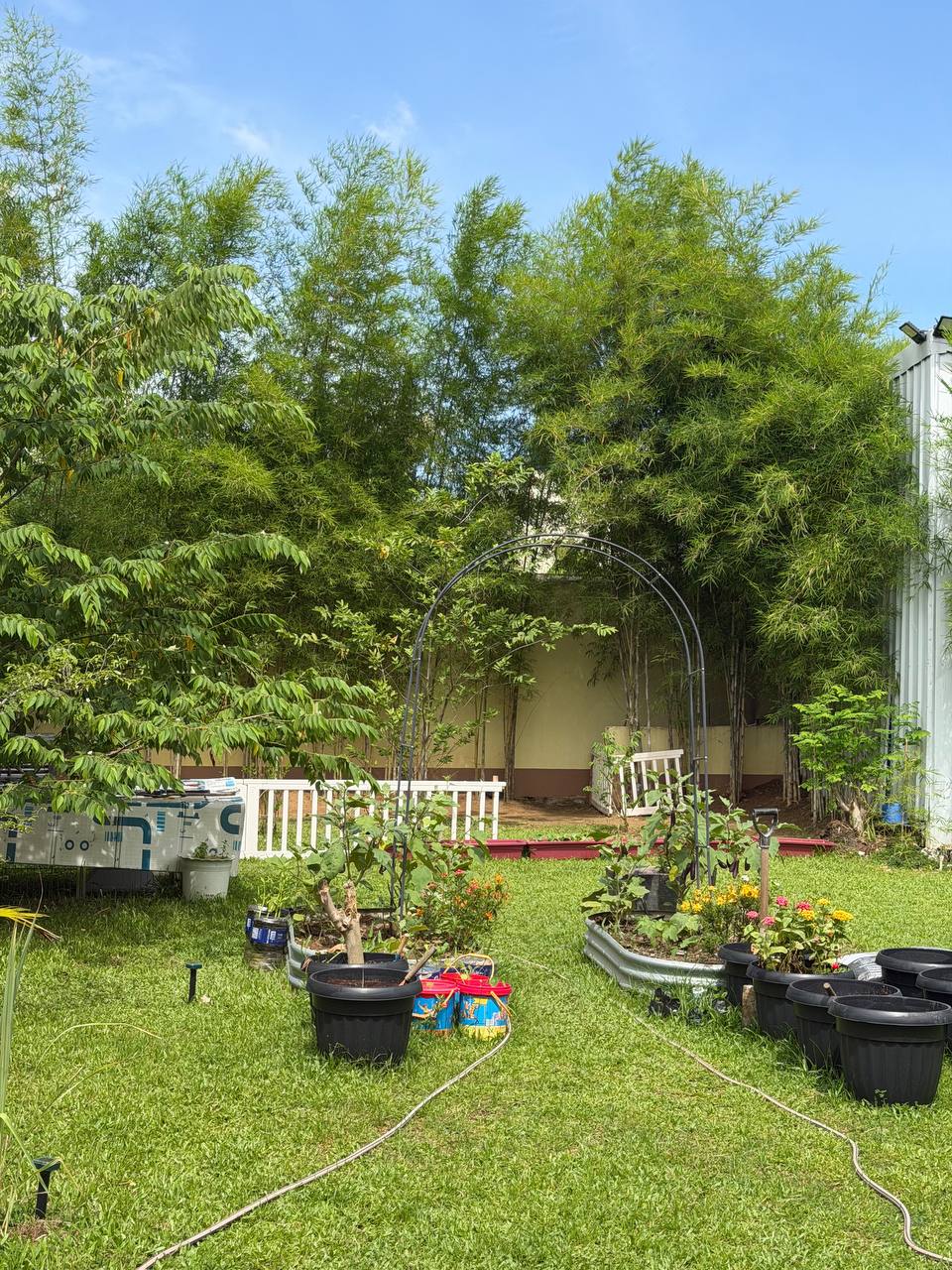
I did not yet realise that the garden itself would become one of our teachers.
I did not know how much life was already happening quietly around us.
And I certainly did not expect that nature study would change the way our whole family looked at the ordinary world.
When an Insect Was Just an Insect
Before this, an insect was simply an insect to me.
Something small moving on a leaf.
Something that might eat the plants.
Something to brush away or avoid.
I did not stop to wonder where it lived, what it ate, how it protected itself, or why it had appeared on that particular plant.
But once we began going outside with the intention of looking, the smallest creatures started to introduce themselves.
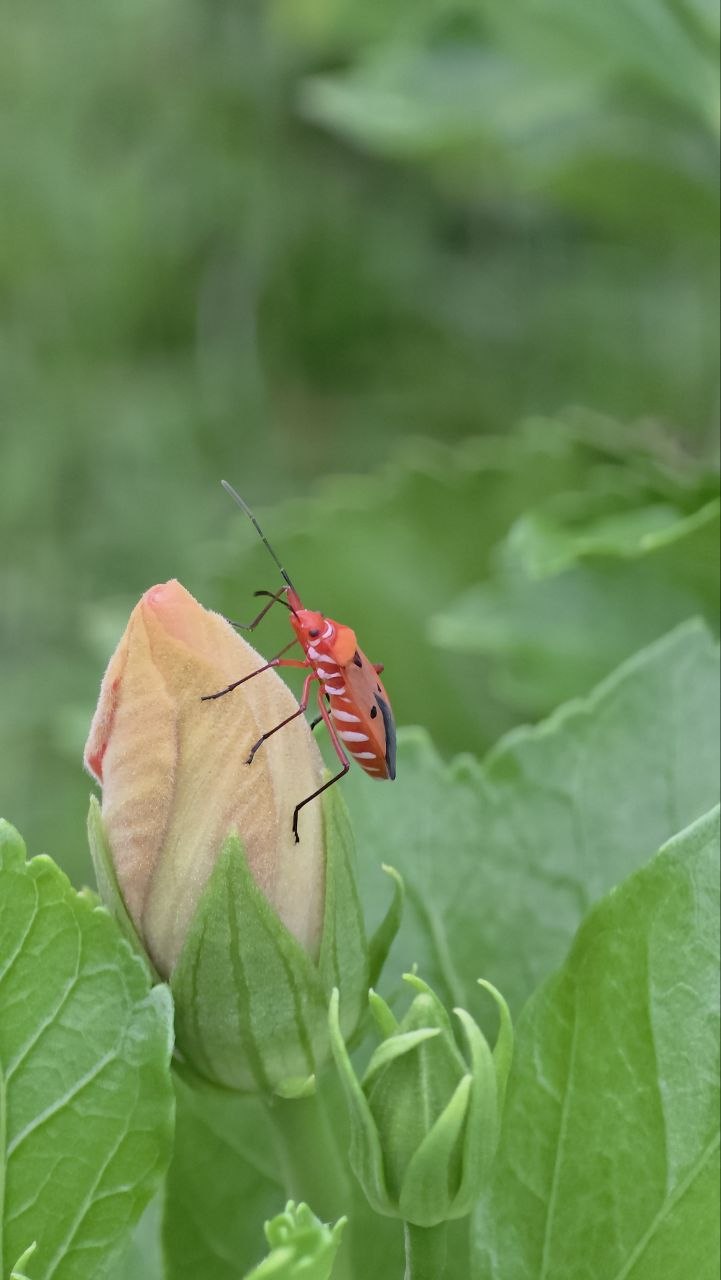
One of the first insects we noticed was a cotton stainer. To me, it looked like a cute and curious mutation between a cockroach and a ladybug. It had a long red-and-black body, and we often found several of them gathered around our gumamela.
Later, we learned that cotton stainers are true bugs that commonly feed on plants belonging to the hibiscus family.
Suddenly, their presence on the gumamela made sense.
Before nature study, I might have noticed them only long enough to decide whether they were pests. Now, we stopped to look at the patterns on their backs. We watched them move around the seed pods and crawl underneath the leaves.
They were no longer merely bugs.
They had become the cotton stainers that lived on our gumamela.
We had met them.
The Spider That Did Not Need a Web
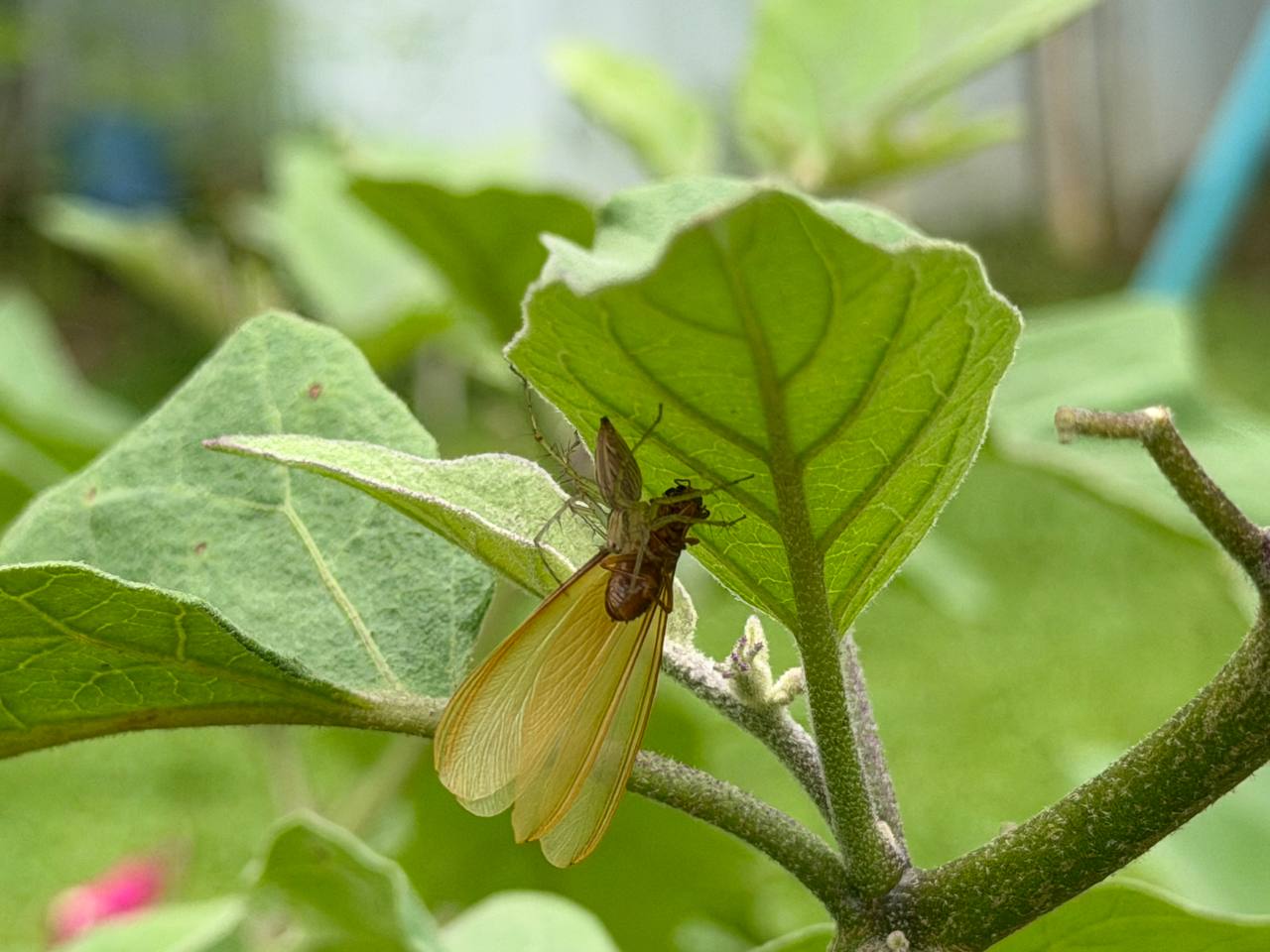
Then we met a lynx spider.
Until that day, I assumed that spiders caught their food in webs. That was simply what spiders did, wasn't it?
But this spider waited among the leaves and hunted without a web.
We later learned that lynx spiders are active hunters. Although they can produce silk, they do not build webs to catch their prey. Instead, they stalk or wait for small insects among leaves and flowers.
That one small discovery corrected something I had believed for most of my life.
And that is one of the quiet gifts of nature study.
It teaches the child.
But it also humbles the parent.
We begin to realise how much of the world we have been walking past without truly seeing.
The Caterpillars We Now Know by Name
Our garden also introduced us to caterpillars.
We met an oleander hawk-moth caterpillar, so large and remarkable that it hardly seemed real. We found lime swallowtail caterpillars on our citrus plants. We encountered sphinx moths and began following moths and butterflies through their different stages of life.
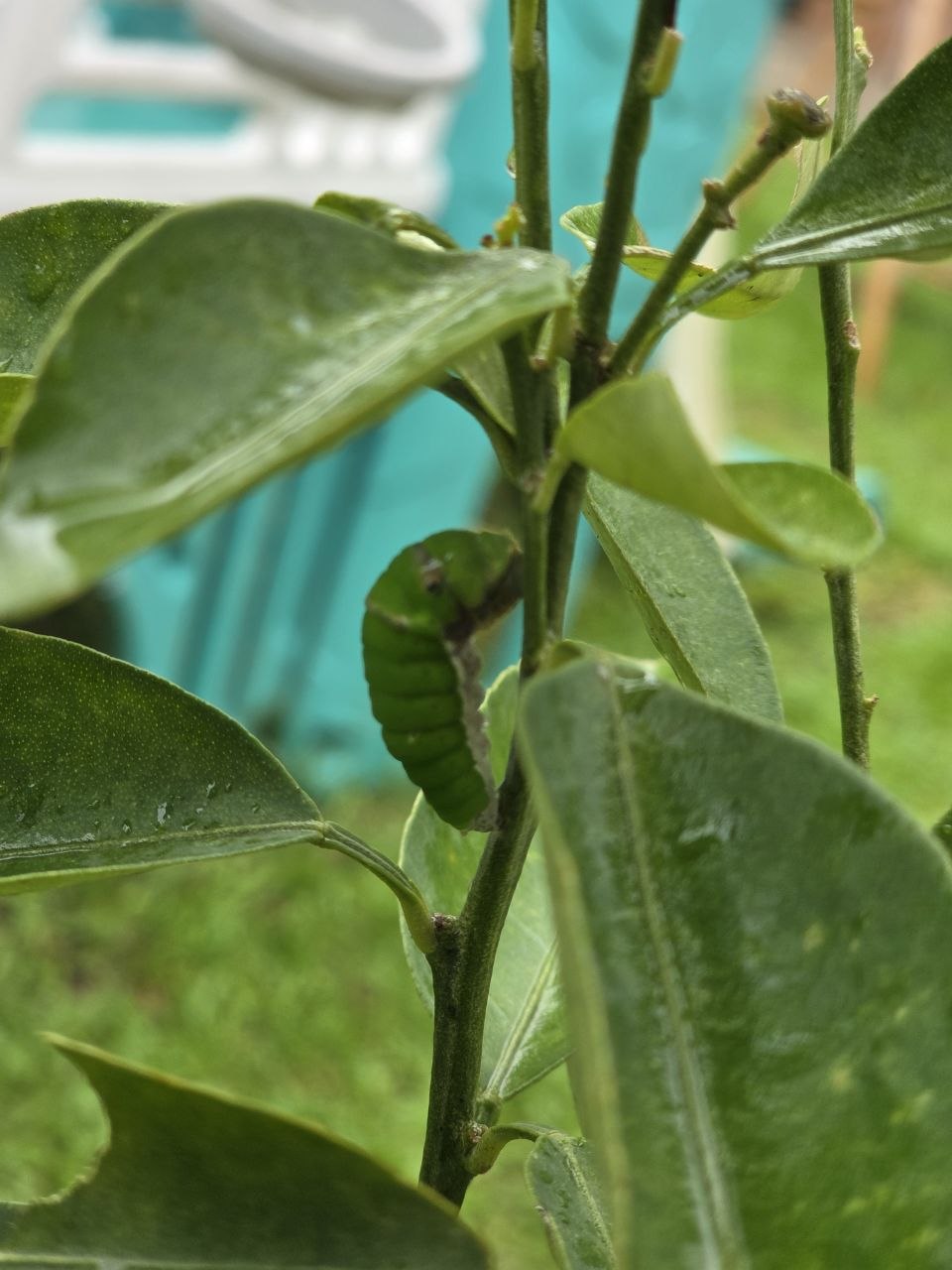
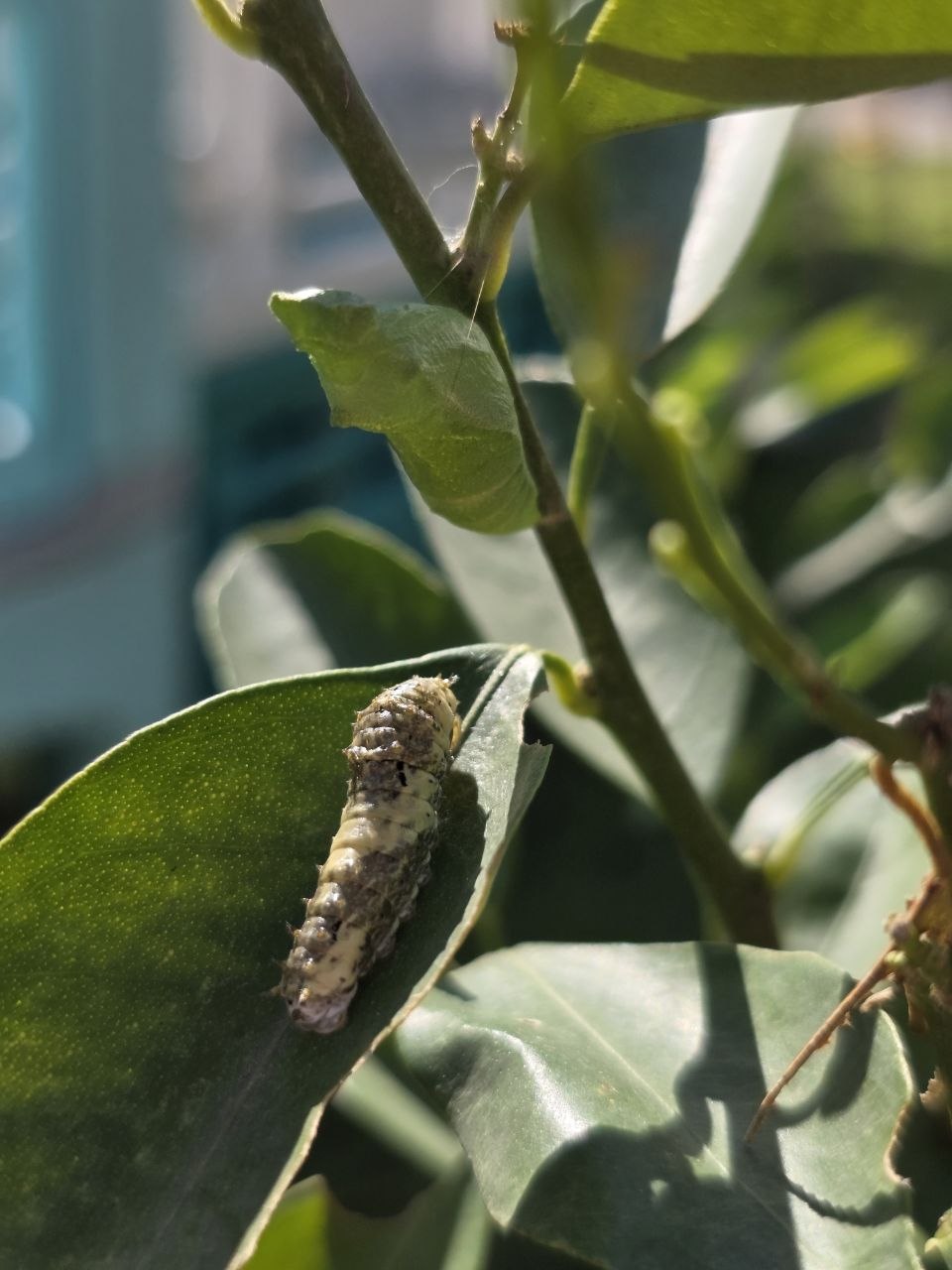
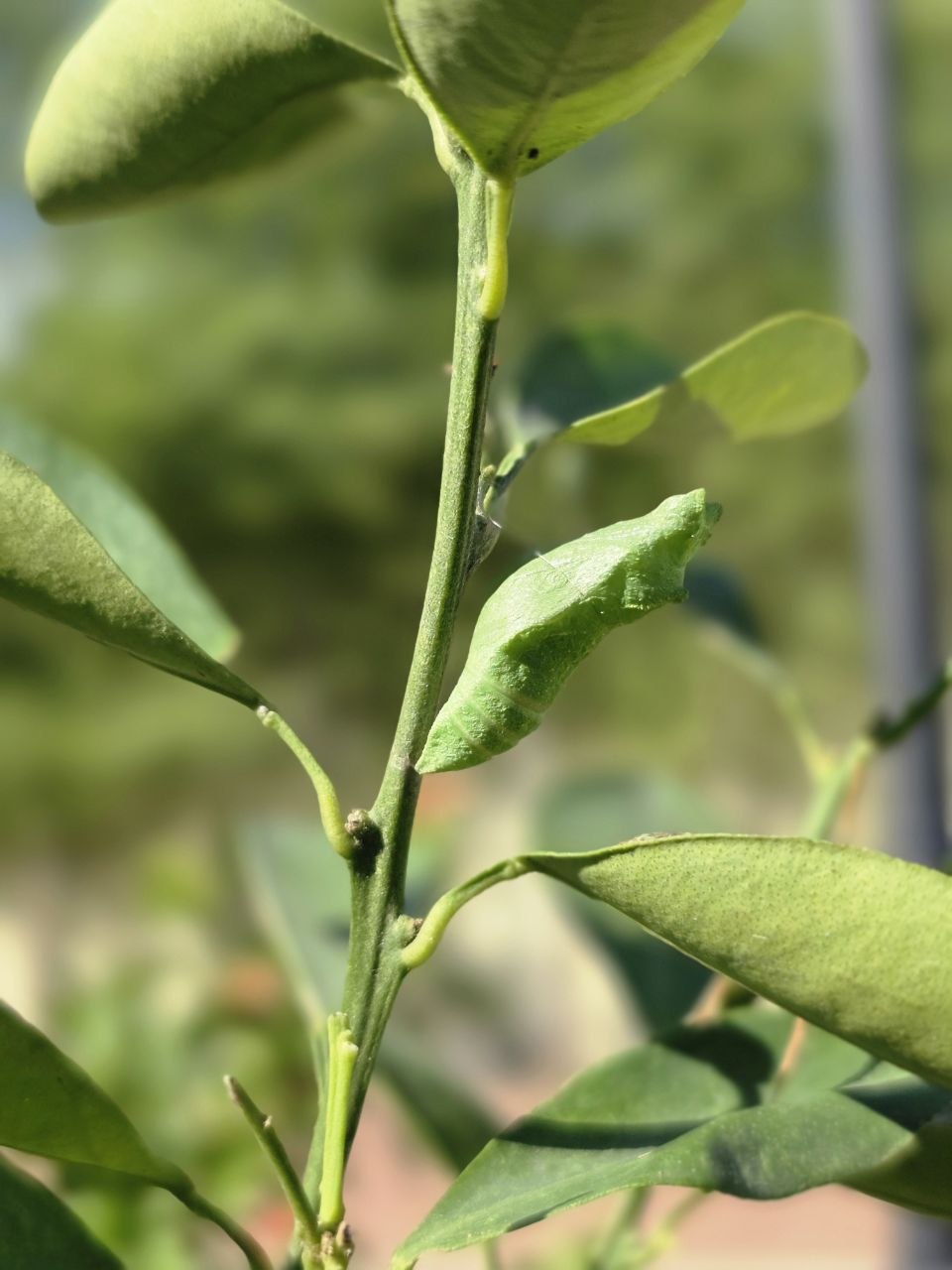
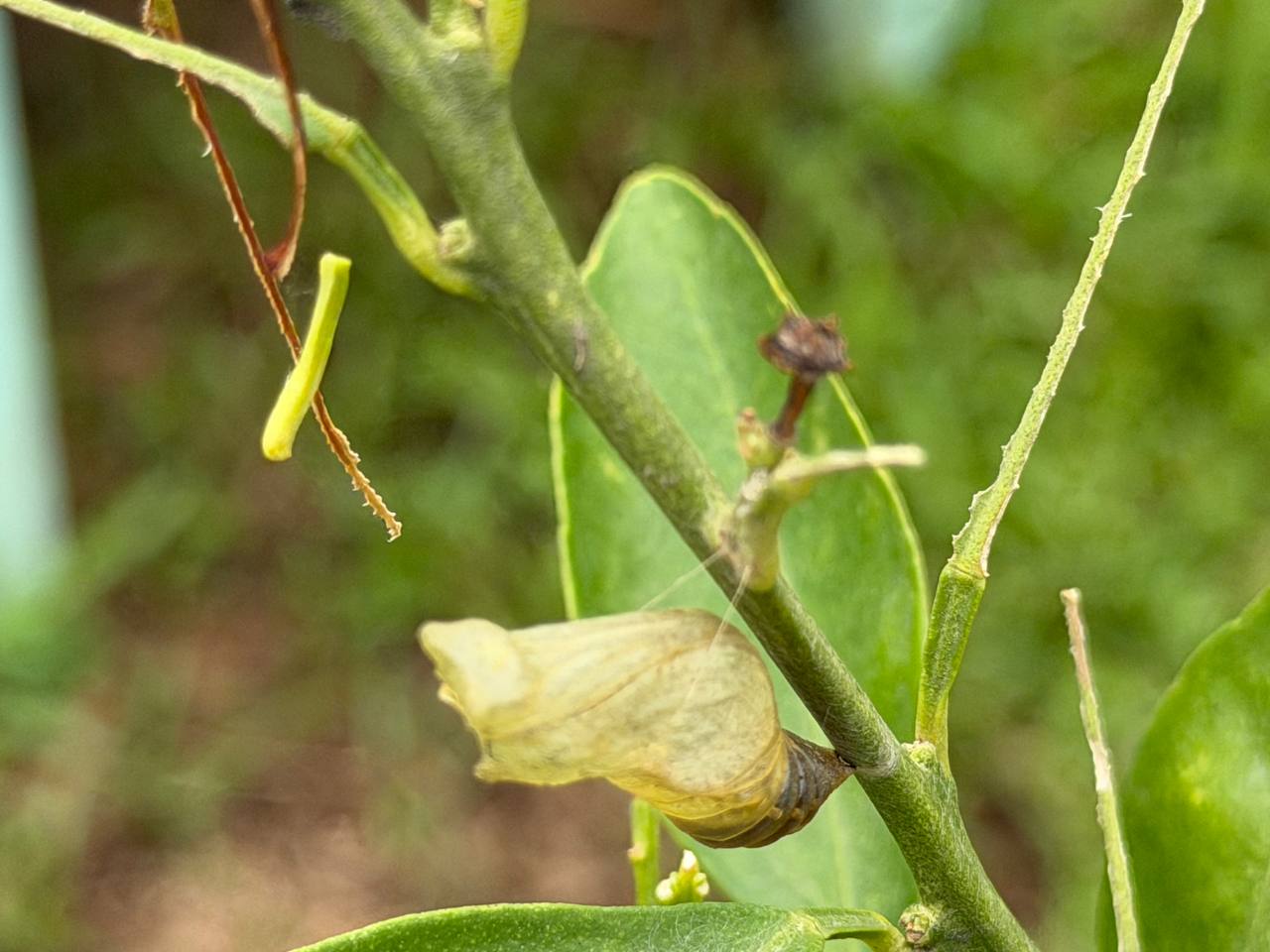
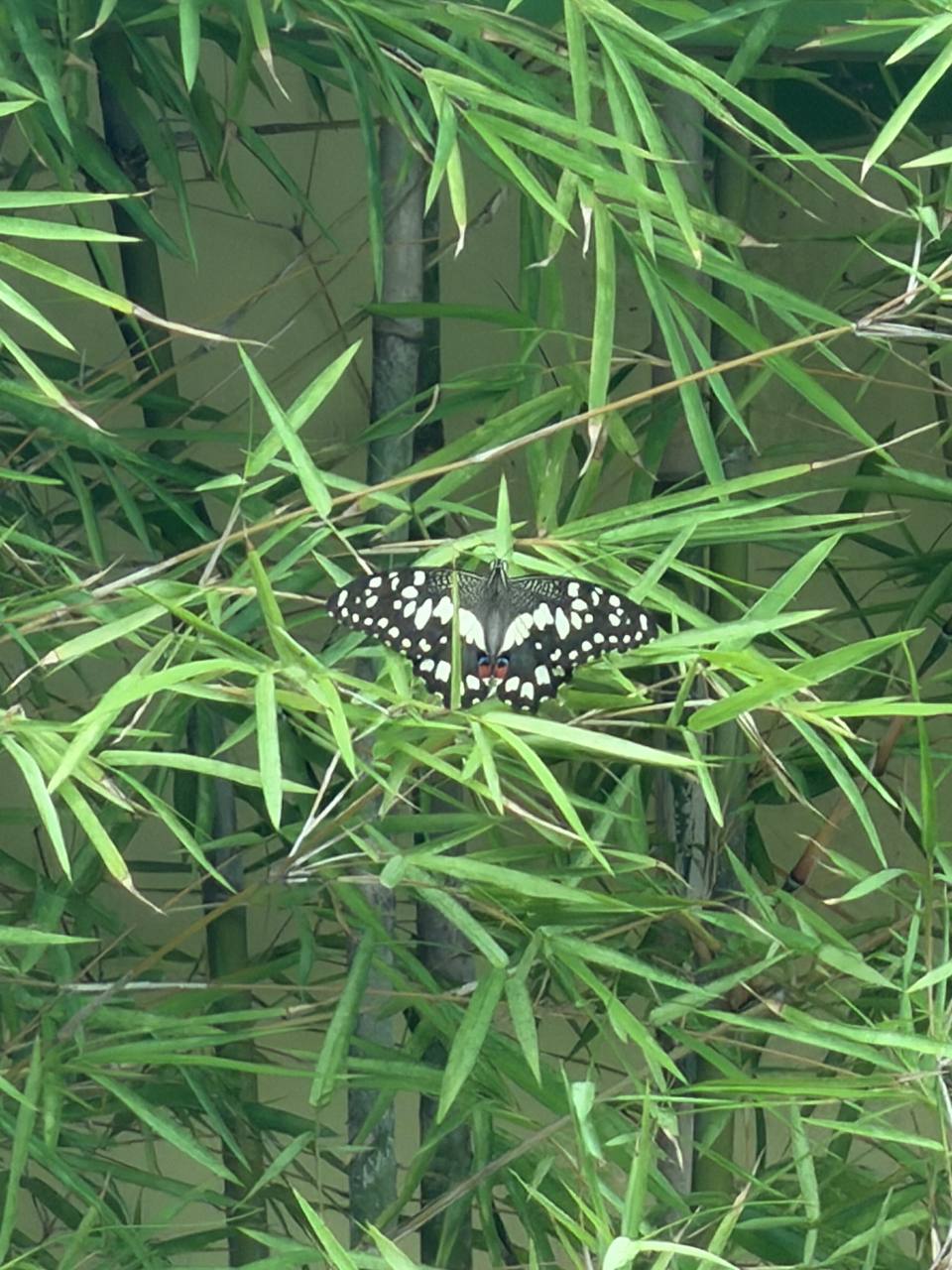
Then, one day, we found a moth that looked almost exactly like a wasp.
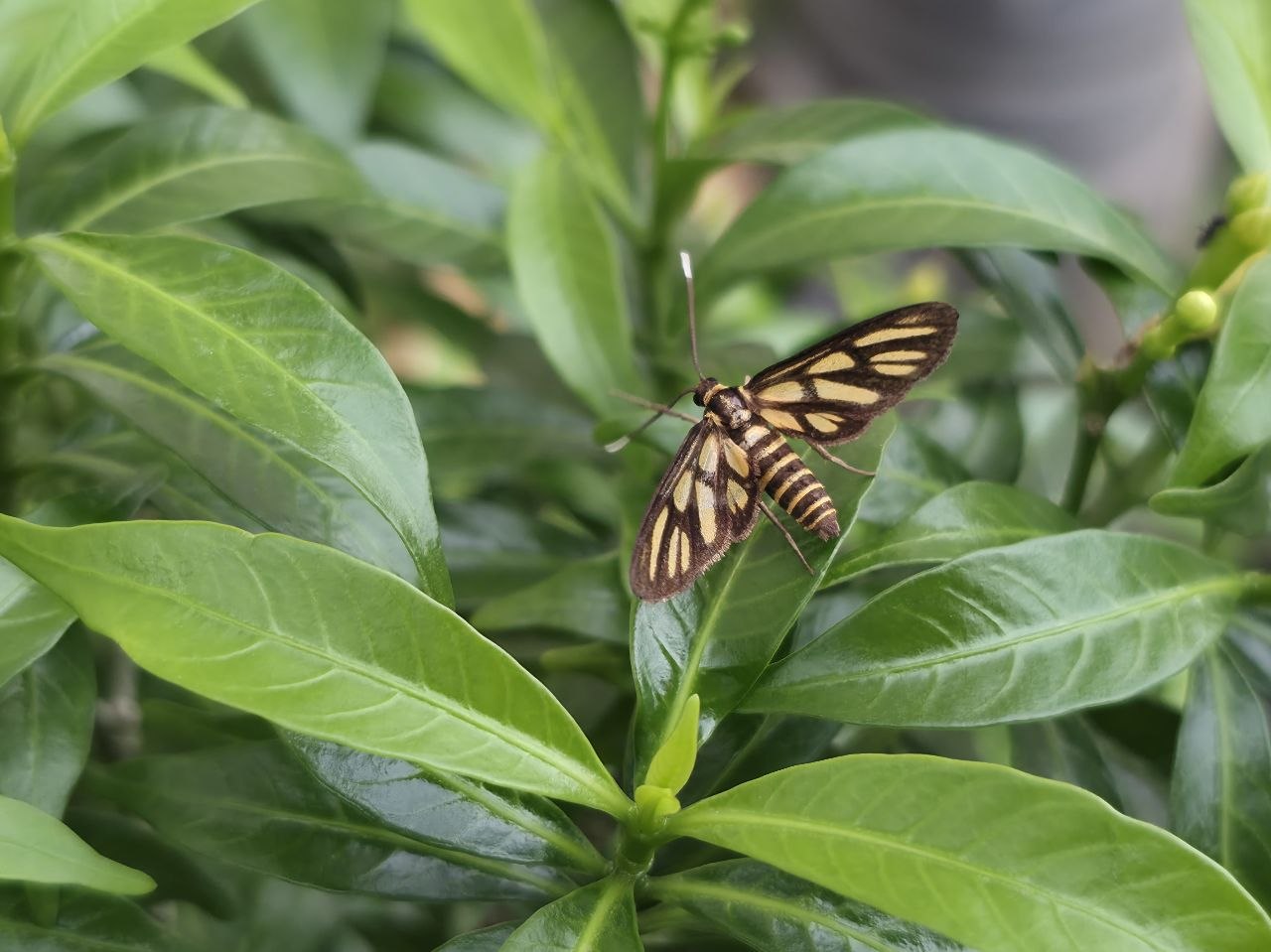
It had a dark body, yellow markings, and partly transparent wings. We later identified it as Hübner's wasp moth, Amata huebneri. Its wasp-like appearance helps it resemble an insect that predators may be more hesitant to attack.
A few months earlier, we might simply have said:
"There is a strange insect outside."
Now we were asking:
"Is it a moth or a wasp?"
"Why are parts of its wings transparent?"
"What plant was it resting on?"
"Does it fly during the day?"
"What does its caterpillar look like?"
Nothing in the garden had suddenly changed.
We had changed.
We had begun to pay attention.
We Were Not Yet Doing Nature Study "Correctly"
I should say this honestly: when we began, I did not yet know how nature study was meant to be practised in the Charlotte Mason method.
I had not yet learned about purposeful nature walks, repeated visits to familiar places, seasonal special studies, object lessons, nature lore, or brush drawing.
We simply went outside.
We looked for something interesting.
We tried to observe its details.
Sometimes the children drew what they found. Sometimes I asked what they could see, smell, or feel. If we were observing something edible, such as a fruit or herb, we might taste it too.
That was the extent of my knowledge then.
I had brought the basket, so to speak.
I did not yet know everything that belonged inside it.
And yet, even that very simple and imperfect beginning was already changing our family.
The children started calling me whenever they found something outside.
"Mama, come and see!"
My husband became involved in identifying insects and plants. We checked leaves for eggs and caterpillars. We watched the weather more closely. We noticed which creatures appeared after rain and which plants attracted particular visitors.
Nature study was no longer merely a subject I was preparing for our homeschool.
It was becoming part of our family life.
We were learning to see.
Nature Study Is More Than Collecting Facts
As I continued reading about Charlotte Mason, I began to understand why these encounters mattered.
Nature study is not simply about knowing facts about plants and animals. It is about becoming acquainted with them.
A child may memorise that a butterfly has six legs, four wings, and three main body parts. That is useful information.
But it is different from recognising the butterfly that regularly visits the calamansi, knowing where its caterpillar feeds, and remembering the morning when one finally emerged from its chrysalis.
The first is information.
The second is relationship.
Charlotte Mason nature study invites children to know the living world in much the same way that we come to know a person: through time, attention, familiarity, and repeated encounters.
We do not meet a new friend and immediately memorise her height, address, birthday, and phone number.
We spend time with her.
We listen.
We notice.
We return.
And slowly, we come to know her ways.
The same is true of nature.
The Workshop That Helped Me Understand the Method
Last week, I attended a nature-journaling workshop in BGC led by the very kind and knowledgeable Ms. Rach Rivera.
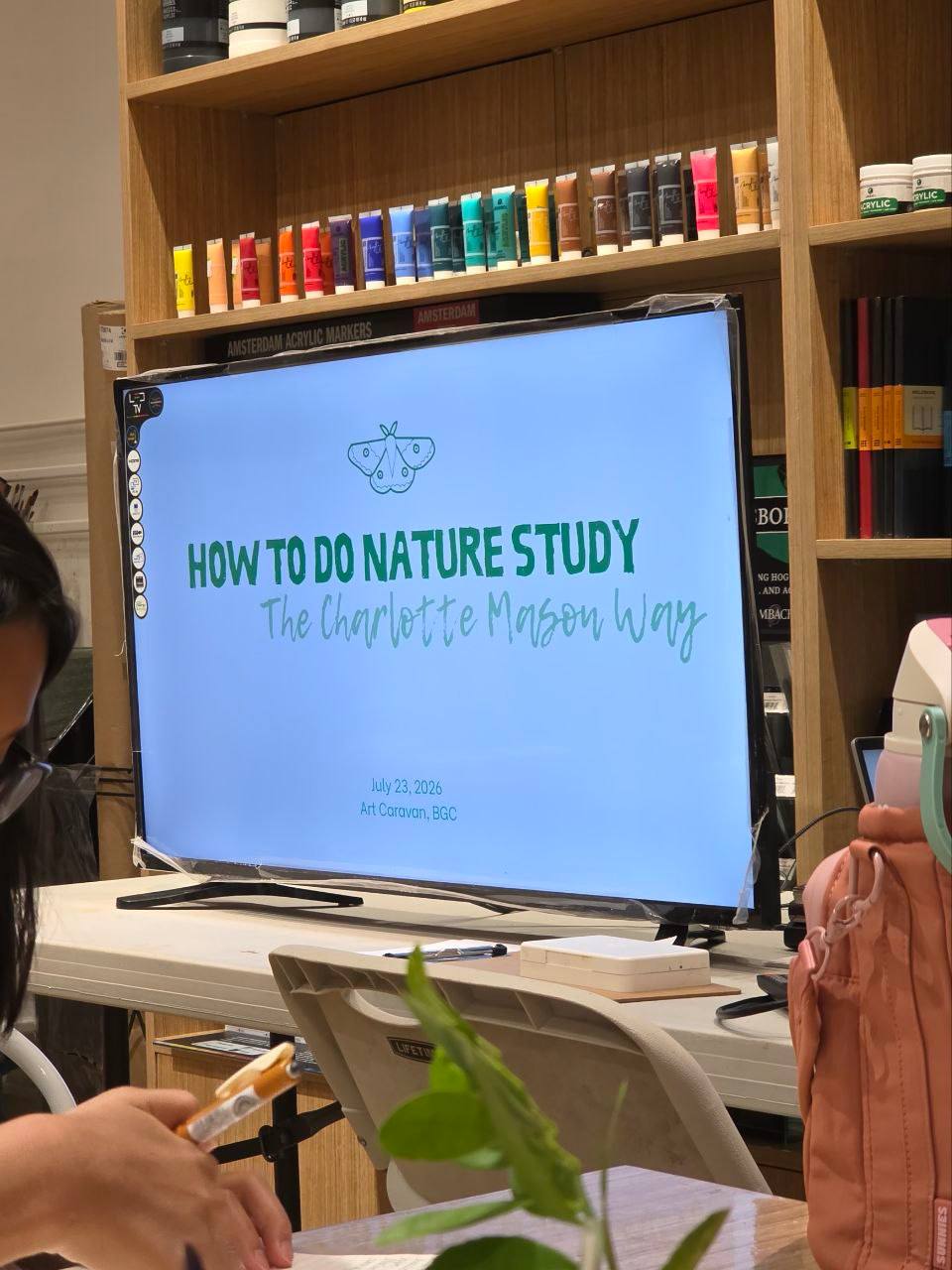
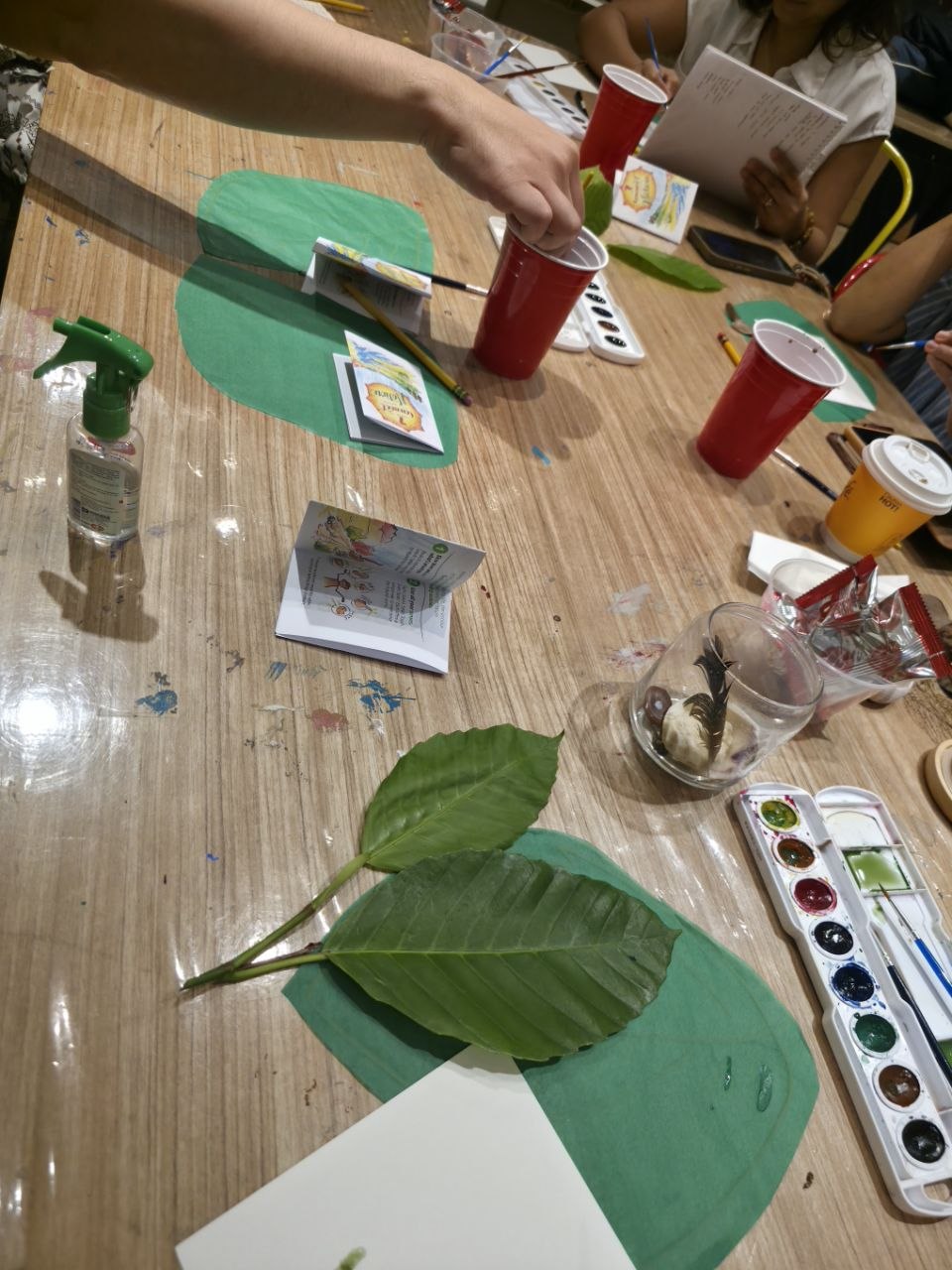
By then, I had already witnessed how much nature study could give our family, even through our unstructured attempts. But the workshop helped me understand how the different practices fit together within the Charlotte Mason method.
I learned that nature study is not simply:
Go outside, find something, and draw it.
The drawing is only one part.
Charlotte Mason nature study includes a fuller rhythm of purposeful nature walks, repeated visits to familiar places, seasonal or special studies, short object lessons, nature lore through living books, nature notebooks, and brush drawing.
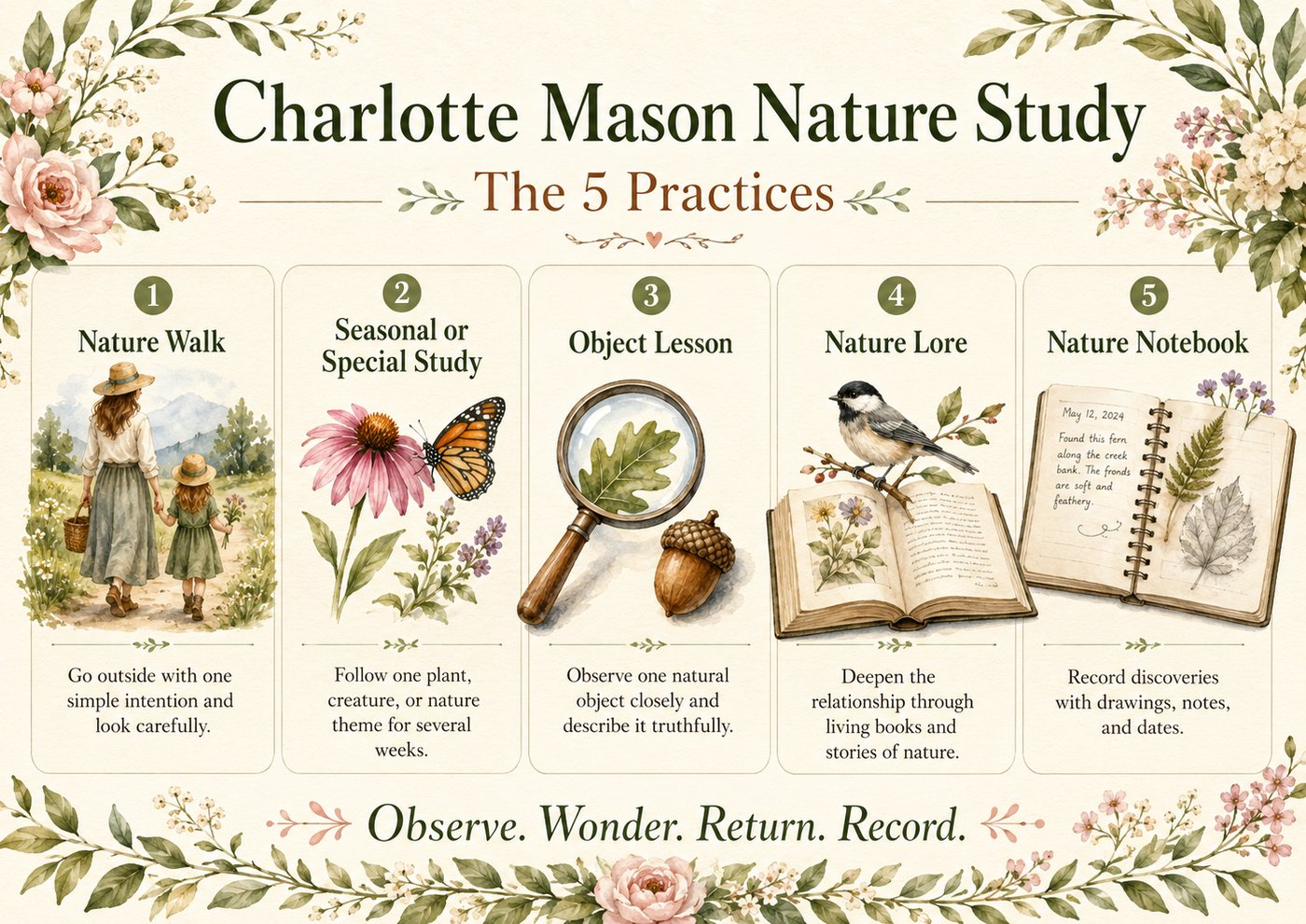
Each practice trains a different kind of attention.
Together, they help the child form a relationship with the natural world instead of merely gathering facts about it.
And now that I understand the method more clearly, I am even more excited about what nature study may bring into our family—not only knowledge, but also wonder, patience, care, and love for God's creation.
A Nature Walk Is Not a Nature Lecture
One of the most helpful things I learned was that a nature walk should not become an outdoor lecture.
As parents, we often feel that teaching means constantly explaining. We point to a tree and begin naming its parts. We see an insect and immediately search for its species. We try to turn every discovery into a complete lesson because we are afraid that otherwise, we are not doing enough.
But before children need explanations, they need time to look.
A parent may set one simple purpose for the walk:
"Let us see what is visiting the gumamela today."
"Let us listen for birds."
"Let us look for different seed pods."
"Let us find a tamarind tree."
Then we go outside and observe.
We do not need to fill every silence.
We can ask:
"What do you notice?"
"What is it doing?"
"Where did you find it?"
"How is this leaf different from the other one?"
And sometimes the most honest and useful thing we can say is:
"I don't know yet. Let us look carefully, and then we can find out."
In nature study, the parent does not always stand above the child as the expert.
Often, we kneel beside the child as a fellow observer.
Familiar Places Become Richer
I also learned the value of returning to the same places.
At first, visiting somewhere new every week may seem more exciting. But a child cannot notice change if she never returns.
When we revisit the same garden, park, village road, or church ground, we begin to recognise the story of that place.
A tree flowers.
A fruit begins to form.
A bird builds a nest.
A caterpillar disappears.
A chrysalis changes colour.
Mushrooms appear after several days of rain.
A plant becomes home to a creature that was not there before.
The place becomes richer, not because it was previously empty, but because the child is learning to recognise its inhabitants.
Familiarity is not the enemy of wonder.
Very often, familiarity is what allows wonder to deepen.
What Is Nature Offering Us Right Now?
Another part of the Charlotte Mason approach is the seasonal or special study. This means choosing one area of nature to notice more closely for several weeks.
A family might focus on butterflies, flowers, garden insects, local trees, birds, spiders, seeds, snails, clouds, frogs, or creatures that appear during the rainy season.
For families in the Philippines, this does not need to follow the seasonal rhythm of Europe or North America.
We have our own patterns:
- The dry and rainy seasons.
- Amihan and habagat.
- Flowering and fruiting periods.
- Caterpillars becoming abundant.
- Frogs calling after rain.
- Mushrooms appearing in damp soil.
- Birds arriving or becoming more noticeable.
- Rice fields changing through planting and harvest.
Rather than asking what a foreign curriculum says we should study this month, we can ask:
"What is nature offering us right now?"
Then we begin there.
The August Nature Study Plan
A gentle four-week, rainy-season plan for Filipino families — one focus each week, simple prompts, and typhoon-day options. Free to download.
Get the free August plan →The Object Lesson: Learning to Tell the Truth About What We See
An object lesson is a short, focused observation of one natural object.
It might be a leaf, flower, seed pod, shell, feather, fruit, twig, stone, or safely observed insect.
The parent does not begin by explaining everything about it.
Instead, she asks questions that help the child see more accurately.
- What is its general shape?
- Where is it widest?
- How many parts can be counted?
- Is it smooth, rough, waxy, hairy, or ridged?
- What colours are truly present?
- Are both sides the same?
- Does it have a scent?
A leaf is no longer only green.
It may be yellow-green near the tip, darker beside the veins, paler underneath, and brown where an insect has eaten it.
The child is not merely gathering details. She is learning to describe what is actually there, not what she assumes should be there. This becomes the foundation of scientific thinking.
The Nature Notebook Is a Record of Relationship
The child may record some of these encounters in a nature notebook.
A simple entry might include the date, place, common name, scientific name when known, a drawing or watercolour, and one short observation.
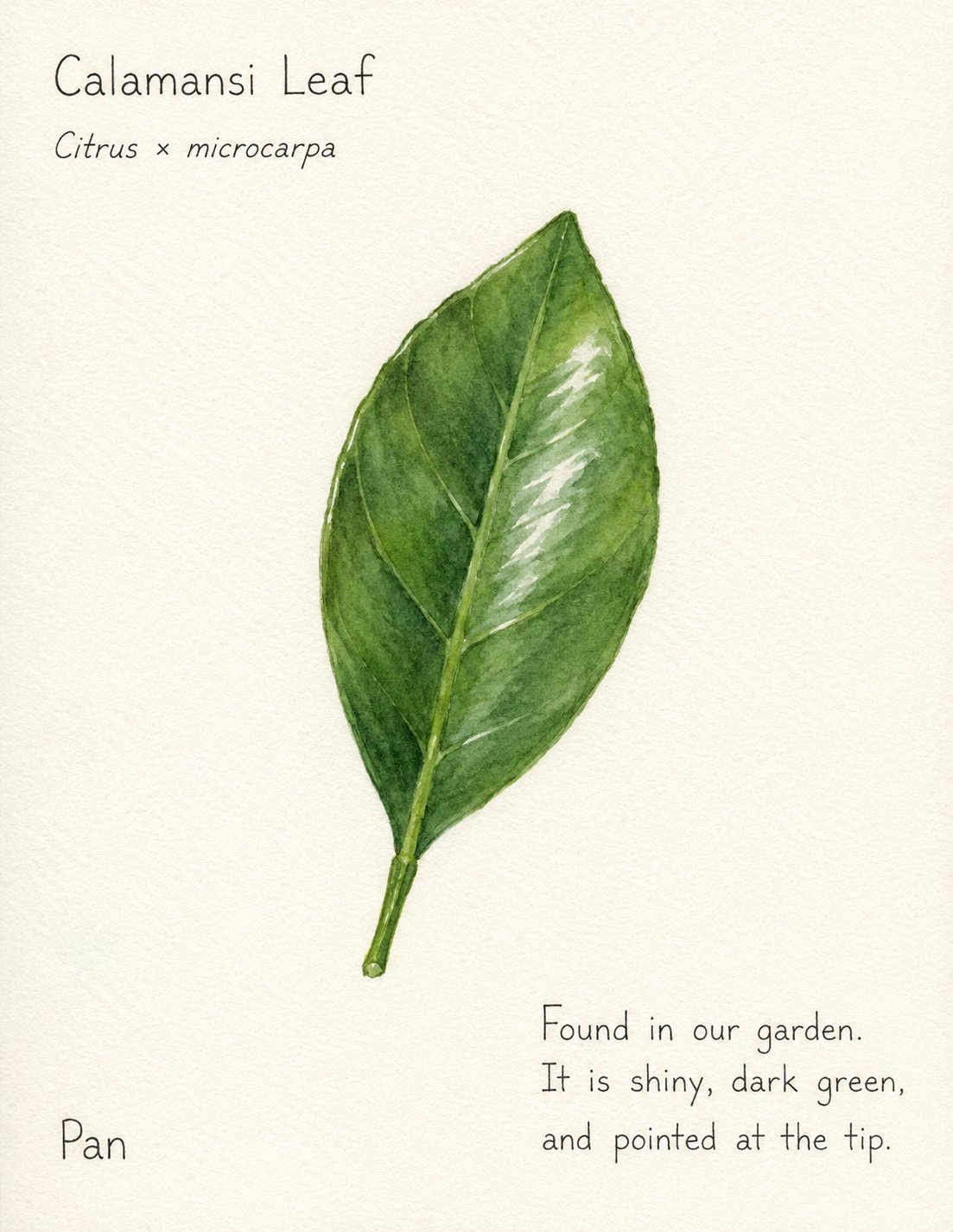
For a young child, the entry may be very small.
One leaf.
One brush painting.
One dictated sentence.
"We found this beside the gate after the rain."
The parent may write the child's words underneath.
The notebook should remain the child's personal record. It is not meant to become a collection of perfect botanical paintings or another school exercise filled with corrections.
It should show the child's growing relationship with nature—including her imperfect attempts.
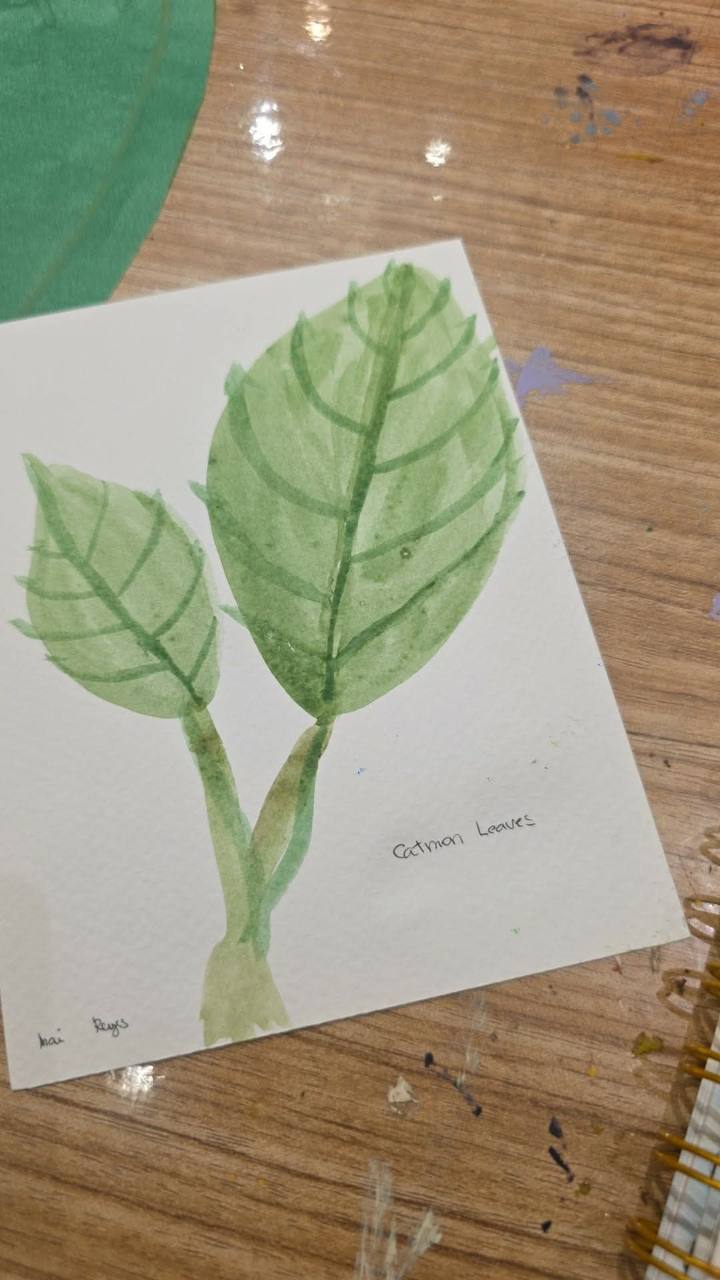
And not every nature walk needs to produce a notebook page.
Some discoveries should simply remain discoveries.
If every observation immediately becomes an assignment, the child may eventually stop pointing things out because noticing something creates more work.
Why Charlotte Mason Preferred Brush Drawing
Charlotte Mason encouraged the use of brush drawing and watercolour, particularly in nature notebooks.
In brush drawing, the child does not first create a complete pencil outline and then colour inside it. Instead, she observes the specimen and forms it directly with the brush.
This is not because watercolour automatically makes a page more beautiful.
The brush asks the child to look before she makes a mark.
She must notice the direction of the stem, the width of the leaf, the shape of the petal, the balance of the whole object, and the changes in colour and light.
A pencil can invite endless erasing and correcting.
The brush encourages decision.
Still, brush drawing should be introduced gently. A child can first practise thin and thick lines, simple leaf shapes, petals, curved stems, light and dark washes, and different shades of green.
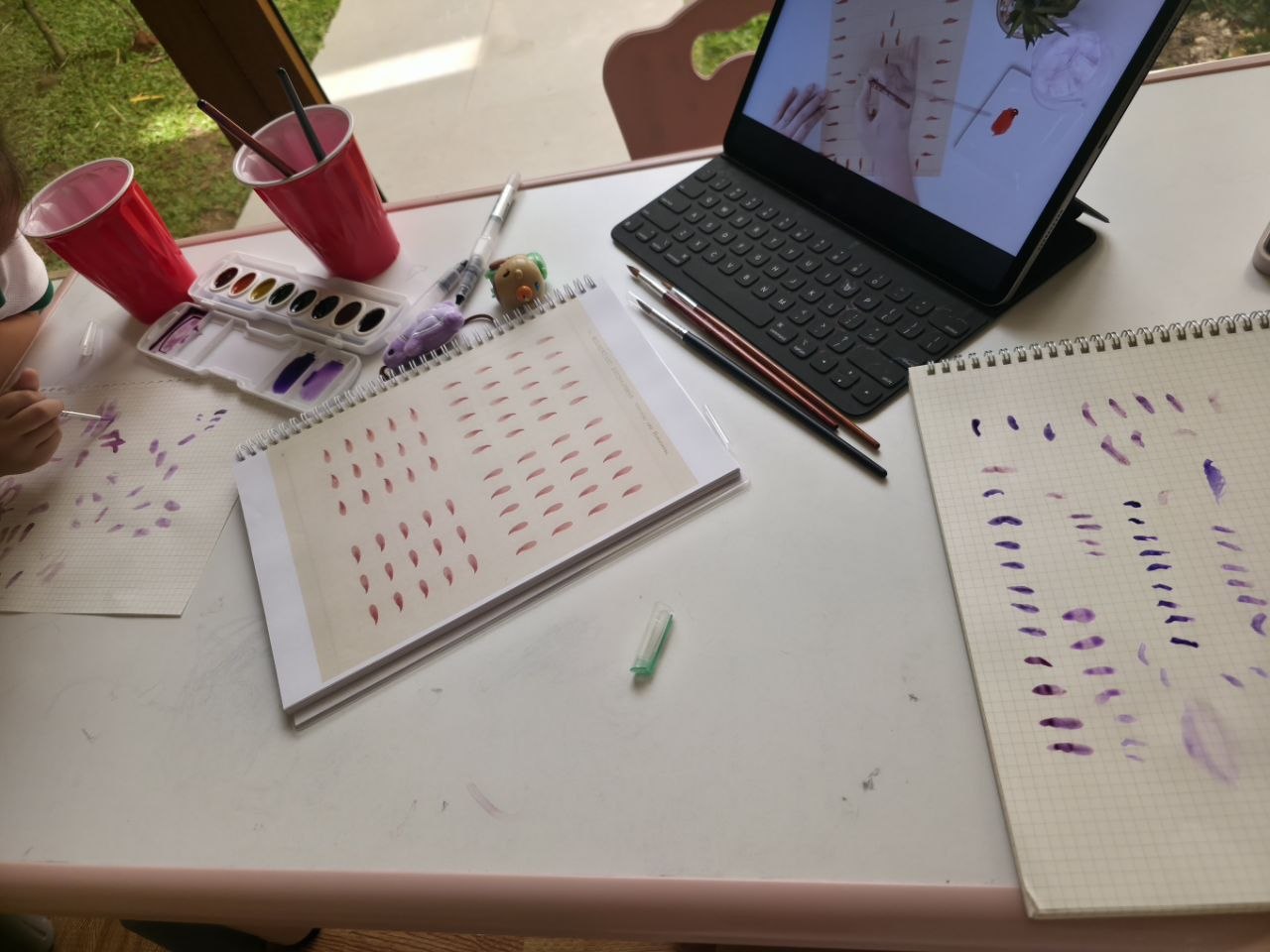
These lessons can happen separately from the nature notebook so that the notebook does not become a stressful art exercise.
The goal is not perfection.
The goal is attention.
Nature Lore: Hearing the Creature's Story
Nature lore was another part of the method that I did not fully understand before attending the workshop.
Nature lore is knowledge about the natural world presented through living books.
A child may meet a caterpillar in the garden. She observes where it rests, what it eats, how it moves, and how its appearance changes.
That is direct nature study.
Later, we may read a beautifully written account of a caterpillar shedding its skin, forming a chrysalis, and eventually emerging as a butterfly.
That is nature lore.
A simple way to remember it is:
Nature study is meeting the creature. Nature lore is hearing its story.
Nature lore does not replace the real encounter.
It deepens it.
The child may meet, observe, record, read, and then return to notice something more.
Sometimes the book may come first and awaken interest. We may read about a bird and then go outside hoping to recognise its call.
The rhythm can move in either direction, as long as the real living world remains at the centre.
But What About Families Without a Garden?
This question stayed with me after the workshop.
What about families living in condominiums?
What about children with very little access to gardens, fields, parks, or forests?
A garden certainly makes some kinds of observation easier, but a garden is not required.
Nature is not absent from cities.
It grows through cracks in pavements.
It rests on electric wires.
It appears in roadside trees, clouds, rainwater, balcony plants, market fruits, ants, moths near lights, and birds outside windows.
Sometimes, nature study can even happen from inside the car.
Looking for a Tamarind Tree Through the Car Window
We tried this just this weekend.
My children did not yet recognise the tamarind tree, or sampalok. Before travelling into town, I showed them a photograph and asked them to study its general appearance.
Then, as we drove, I invited them to look at the trees along the road—inside our village and through the neighbouring barangays.
We were already learning about barangays, so I pointed out where one barangay ended and another began. My husband kindly drove a little more slowly so the children would have enough time to look.
Then they saw one.
And another.
And another.
We realised that there were many tamarind trees in our community.
They had probably always been there.
We simply had not noticed them before.
That small activity became a nature lesson, a geography lesson, and a family experience all at once.
It reminded me that nature study does not always require a forest trail.
Sometimes it means learning the shape of one tree and searching for it through the car window.
Nature Study in Small and Urban Spaces
Families with limited green space can begin in many simple ways.
You can observe birds from a window, keep one balcony plant, study herbs and vegetables from the market, watch clouds, look for moths around outdoor lights, examine seeds from kitchen fruits, collect fallen leaves during an ordinary walk, or return regularly to the same neighbourhood tree.
You can learn one plant from a photograph and look for it while travelling.
You can notice the birds resting on power lines.
You can compare the shapes of leaves growing beside a pavement.
You can watch what appears after rain.
The purpose is not to reproduce someone else's countryside.
It is to become acquainted with the living world that is actually around your child.
I Am Still Learning Too
I am still new to homeschooling.
I am not a naturalist, botanist, entomologist, or Charlotte Mason expert.
I am a mother who has spent the past few months reading, researching, preparing, attending workshops, asking questions, and trying to apply what I learn in our home.
And perhaps that is exactly why I wanted to write this guide.
I know what it feels like to read about nature study and think:
"This is beautiful… but how do I actually begin?"
Begin with one place.
It may be a garden, balcony, roadside, park, or the view from your window.
Choose one thing.
A tree.
A flower.
A bird.
A caterpillar.
A cloud.
A seed from the fruit you ate for breakfast.
Look at it carefully.
Ask your child what she notices.
Return another day.
Read a living story about it.
Make one small record when it feels meaningful.
That is enough for a beginning.
We Planted More Than a Garden
We planted a garden because I thought our children would need it for homeschooling.
But the garden gave us more than lessons.
It gave us shared discoveries.
It gave the children reasons to run outside and call:
"Mama, come and see!"
It gave us conversations with their father and small mysteries to investigate together.
It gave names and stories to creatures we had once overlooked.
It taught us that a spider does not always need a web.
That a moth can look like a wasp.
That a caterpillar may depend on one particular plant.
That a familiar gumamela can hold an entire community of life.
We are still learning how to practise nature study more faithfully. We are still developing our brush drawing, discovering nature lore, and learning how to keep our notebooks without turning them into another source of pressure.
But even our imperfect beginning has already been fruitful.
And that gives me hope—not only for the knowledge our children may gain, but for the kind of people they may become.
Children who notice.
Children who wonder.
Children who care for what is small.
Children who recognise that the world is full of living things with purposes and places of their own.
Children who can look closely at a leaf, a bird, or a tiny insect and understand that God's creation is worthy of love, care, and attention.
We planted a garden for homeschooling.
Perhaps what we were really planting was the habit of seeing.
And now that we have begun to see, the ordinary world no longer feels ordinary at all.
Start here this week
Choose one place — a garden, a balcony, a roadside, or the view from your window — and one thing to notice: a tree, a flower, a bird, a caterpillar, a cloud, or a seed from the fruit you ate for breakfast.
Look at it carefully. Ask your child what she notices. Return another day. Read a living story about it. Make one small record when it feels meaningful.
That is enough for a beginning.
The August Nature Study Plan
A gentle four-week, rainy-season plan for Filipino families — one focus each week, simple prompts, and typhoon-day options. Free to download.
Get the free August plan →With you in the ordinary days,
Mai 🌿
walk with us
Once-a-week notes, book finds, and free printables for fellow Filipino homeschoolers.
Join the Community